The Wedgwood Edme tableware range is one of the most recognizable and beloved designs in the long history of the British ceramics brand Wedgwood. With its soft cream color and classic ribbed border, Edme has been a staple on beautifully set tables worldwide for more than a century. The design is often described as elegant, functional, and quintessentially “traditional English,” but behind this simplicity lies a rich history closely intertwined with the evolution of Wedgwood itself. This article explores the collection in detail, from its manufacturer and designer to its production history, variations, and collector’s value.
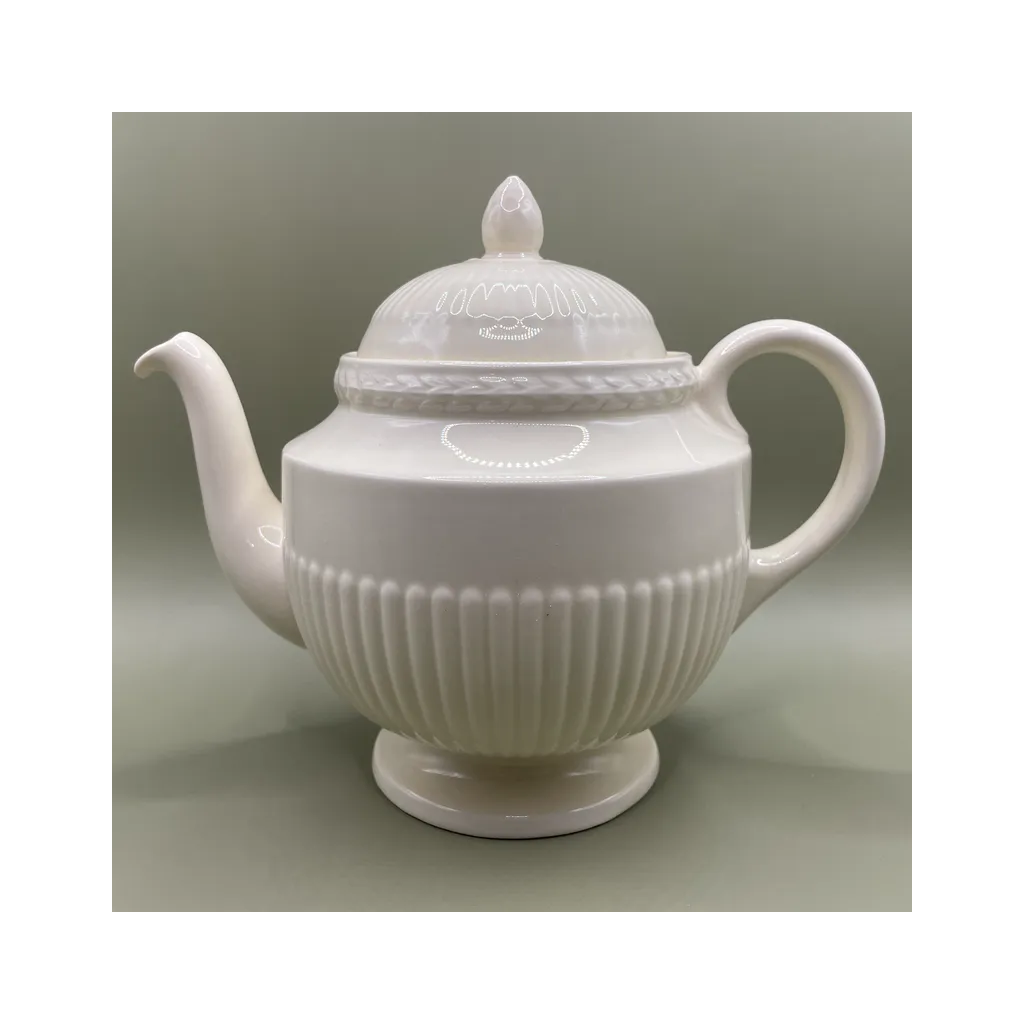
The Edme tableware range was produced by Wedgwood, one of the world’s most iconic ceramic companies. Founded in 1759 by the master potter and entrepreneur Josiah Wedgwood, the company grew to become one of England’s premier manufacturers of fine earthenware and porcelain, playing a pivotal role in the industrialization of pottery production.
Wedgwood is particularly famous for three landmark ceramic innovations:
Creamware (Queen’s Ware)
Jasperware (the famous blue-and-white relief stoneware)
Black Basalt
Edme fits perfectly into this tradition of functional yet elegant dinnerware. Crafted from high-quality earthenware (creamware), it was designed as a luxury range suitable for everyday use.
The Edme design is widely credited to John Goodwin, a talented designer working for Wedgwood in the early 20th century. Goodwin based his work on 18th-century archival motifs from Wedgwood’s own history. This means that Edme was not designed entirely from scratch, but is rather a modern interpretation of classical Wedgwood styles from the Georgian era.
Key elements of his approach included:
This combination of historical inspiration and modern manufacturing techniques made Edme exceptionally successful throughout the 20th century.
The Edme range emerged in the early 20th century, a period when Wedgwood was repositioning itself as a maker of high-quality yet accessible tableware.
The name “Edme” is often associated with the term “Queen’s Ware,” a type of creamware originally developed by Josiah Wedgwood in the 18th century for royal households.
Important historical context:
Wedgwood had already established an immense reputation for creamware in the 18th century.
During the 19th century, production shifted toward an industrial scale.
By the early 20th century, there was a growing demand for classic, timeless tableware among middle-class and affluent households.
Edme was designed as the perfect answer to this need:
As a result, the design became one of Wedgwood’s most successful “heritage” tableware sets.
The Wedgwood Edme tableware line was first produced in the early 20th century (around 1908) and remained in production until 2024. This means that Edme was produced continuously for over 100 years.
Key stages:
The tableware can be identified by a number of distinctive features:
Edme is designed to:
The tableware also includes:
The Edme line includes several decorative variations that often cause confusion. It is important to note that these variations do not differ structurally in shape, but primarily in their decorative details.
Although these names might suggest otherwise, in practice they often refer to:
Edme and Windsor: Often Confused
There is often confusion between the Edme and Windsor collections. Despite their similarities at first glance, they are completely different tableware sets. In addition to differences in shape, the colors are also different. Yet the sets do not look out of place when placed side by side.
The collectible value of Wedgwood Edme is often underestimated. Because the tableware was produced in large quantities for a long time, it is not always viewed as a “rare, top-tier collector’s item.” Yet that is only part of the story. In practice, Edme actually possesses a number of strong qualities that make it attractive to both collectors and buyers: stability, recognizability, and excellent retention of value.
Retains its value thanks to timeless design
One of Edme’s greatest strengths is that its design is largely immune to trends. The cream-colored earthenware fits into virtually any interior, and the classic ribbed texture is timeless. As a result, there is a steady demand for the tableware, regardless of interior design trends. This ensures that Edme does not experience the “ups and downs” typical of more fashionable tableware, but rather maintains a stable market value. Now that the tableware is no longer in production, demand on the secondhand market continues to rise.
Wedgwood’s strong reputation
The Wedgwood name plays a major role in the collectible value. The brand is known worldwide as one of the most influential ceramics manufacturers in history. Wedgwood Edme is sold internationally and known worldwide. Even pieces that are decades old are still valued for their durability and craftsmanship.
Edme as “living tableware”
What makes Edme special compared to many other vintage tableware sets is that it’s not just collected—it’s still used. Many sets aren’t displayed behind glass, but on the dining table.
Parts are still being actively replenished, and replacement parts are often in high demand. This “utility-based nature” means that value is based not only on scarcity but also on practical market demand. And that is good for price stability.
The collectible value of Wedgwood Edme does not lie in extreme rarity, but in something just as valuable: durability and enduring demand. The tableware has proven itself to be a design that transcends generations, both in terms of quality and appearance. As a result, Edme is considered a particularly stable choice in the collectibles market: a tableware collection that not only remains beautiful but also retains its value well over the long term and even benefits from the renewed interest in classic English design.
Wedgwood Edme is a prime example of how traditional design and industrial production can come together to create a timeless classic. Born from historic Wedgwood motifs, designed by John Goodwin, and produced by one of the world’s most influential ceramics manufacturers, Edme has held a permanent place in households worldwide for generations. With its elegant simplicity, durable quality, and recognizable design, Edme remains an important part of the Wedgwood legacy, even now that production has ceased.


