Few brands are as synonymous with British elegance, innovation and timeless design as Wedgwood. For more than two and a half centuries, this pottery has graced the tables of citizens and royalty alike. The history of Wedgwood, which began in 1759 in the heart of the English Midlands, grew into a global empire that shaped the industrial revolution, conquered royal houses, went through deep valleys of bankruptcy and managed to reinvent itself again and again. This is the fascinating story of Josiah Wedgwood, his visionary legacy and a brand that refuses to age.
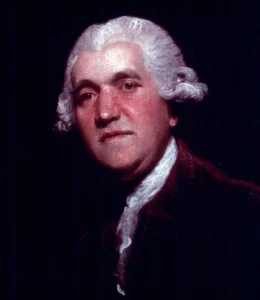
The story of Wedgwood begins with one man: Josiah Wedgwood (1730-1795). Born into a family of potters in Burslem, Staffordshire, his path seemed to be cut off prematurely. As a child, Josiah survived smallpox, but the disease left him with a weak right knee, which even had to be amputated later in his life. This left him unable to perform the hard work of pedaling a potter’s wheel.
What seemed like a curse turned out to be a blessing. Josiah was forced to concentrate on the scientific and business side of pottery. He began experimenting with different clays, glazes and firing temperatures.
In 1759, he leased the Ivy House Works in Burslem and started his own business. Josiah was not just an artisan; he was a chemist, an inventor and a marketing genius avant la lettre. Whereas English pottery at the time was often coarse and dark, Josiah sought a refined, reliable and aesthetic product that could compete with the expensive, imported Chinese porcelain.
His early experiments led to the perfecting of a cream-colored pottery so refined and strong that it laid the foundation for his early success. Josiah understood better than anyone that quality had to go hand in hand with efficiency. He introduced a strict division of labor in his workshops, a revolutionary step that marked the transition from traditional handwork to modern industrial production.
Wedgwood’s final breakthrough on the world stage occurred in 1765. Josiah succeeded in delivering a refined cream tea service to Queen Charlotte, wife of Britain’s King George III. The queen was so impressed with the quality and elegant simplicity of the service that she authorized Josiah to call himself “Potter to Her Majesty.”
The cream-colored pottery was officially named Queen’s Ware. This royal approval was worth its weight in gold. In the eighteenth century, the aristocracy determined fashion; what the Queen bought, the rapidly growing wealthy bourgeoisie wanted as well. Josiah cleverly exploited this by aggressively promoting his Queen’s Ware as the epitome of good taste.
Royal interest was not limited to Britain. In 1773, Russian Czarina Catherine the Great ordered a gigantic dinner service for her summer palace: the famous Frog Service, consisting of no less than 952 unique pieces, each hand-painted with English landscapes and featuring a green frog as its crest. This project cemented Wedgwood’s reputation as the court supplier to Europe’s elite.
With the explosion in demand, the small workshops in Burslem no longer sufficed. In 1769, Josiah opened a brand new, specially designed factory just outside Stoke-on-Trent, which he named Etruria. The name was a tribute to the Etruscan culture in Italy, whose newly discovered ancient vases were a huge inspiration for the neoclassical design of the time.
Etruria was unique. It was not just a factory, but a complete industrial village. Josiah had houses built there for his workers, a school and a mansion for himself (Etruria Hall). Moreover, the factory was located directly on the newly constructed Trent and Mersey Canal, an infrastructure project in which Josiah himself had invested heavily. The water allowed raw materials such as clay and coal to be brought in break free, and fragile tableware to be safely transported to the ports of Liverpool and London.
Etruria remained the beating heart of Wedgwood for nearly two centuries. However, with encroaching industrialization and subsidence of the ground due to mining in the region, the factory became too old and unsafe in the twentieth century.
In 1940, Wedgwood moved to a brand new, state-of-the-art factory in Barlaston, a rural area a few miles from old Etruria. Barlaston was designed as a “factory in a garden. It combined state-of-the-art electric furnaces with healthy working conditions for the staff. To this day,Barlaston is the home of the brand, where the most exclusive pieces are still made by hand.
Josiah Wedgwood’s legacy rests on a series of material engineering inventions that changed the ceramic world forever. These include the most iconic dinnerware and materials the brand has produced.
Wedgwood’s best-known material is undoubtedly Jasperware, introduced in 1774 after thousands of failed experiments. Jasperware is an unglazed, matte stoneware that can be colored in mass. Its most iconic color is the soft light blue, known worldwide as Wedgwood Blue. Gossamer white reliefs, often inspired by Greek and Roman mythology, were applied to this colored background. The absolute masterpiece in Jasperware was the replica of the Portland Vase, an ancient Roman glass vase that Josiah managed to perfectly recreate in ceramic at the end of the 18th century after years of toil.
Even before Jasperware, Josiah perfected the so-called Black Basalt in 1768. This was a rich, deep black stoneware. It was smooth, had a slight luster and lent itself perfectly to the production of busts of philosophers, monumental vases and medallions. It fit seamlessly with the then current trend of rediscovering antiquity.
Introduced in the twentieth century(1964), Wild Strawberry is one of the most beloved and recognizable fine china(Fine Bone China) dinnerware sets in the world. Its iconic decor features hand-drawn wild strawberries, green leaves and delicate pink blossoms, finished with a sophisticated 22-karat gold rim. It exudes the atmosphere of a classic English summer garden and has been a global bestseller for decades, especially in Asia.
For those who love sleek and timeless elegance, the Edme dinnerware is an icon. Designed in 1908 by then art director John Goodwin, Edme is based on designs from Wedgwood’s early eighteenth century. Made from the distinctive Queen’s Ware, it stands out for its recognizable vertical ribbed structure (the fluted style) and aristocratic shapes. It is one of the longest-running and most successful dinnerware sets in the brand’s history.
Introduced in 1995, the Cornucopia dinnerware is a stunning example of how Wedgwood translates classical mythology into a regal, luxurious table setting. Made of high-quality bone china(Fine Bone China), the design is directly inspired by the mythical “Horn of Plenty” (Cornucopia), the Greek symbol of prosperity, wealth and abundance. The dinnerware is characterized by a sophisticated beige clouded parchment border and deep cobalt blue(dark navy) accents. On this mystical background, playful allegorical and mythical creatures, such as unicorns and satyrs, come to life beautifully. Finished with an opulent border of 22-karat gold and ochre-colored arabesques, Cornucopia ranks as one of the most majestic sets for formal dinners in recent history. Although production ceased in 2024, the service has since become a much-loved and sought-after collector’s item.
Wedgwood’s history is closely intertwined with broader world history. The brand was more than a producer of luxury goods; it played a role in major social shifts.
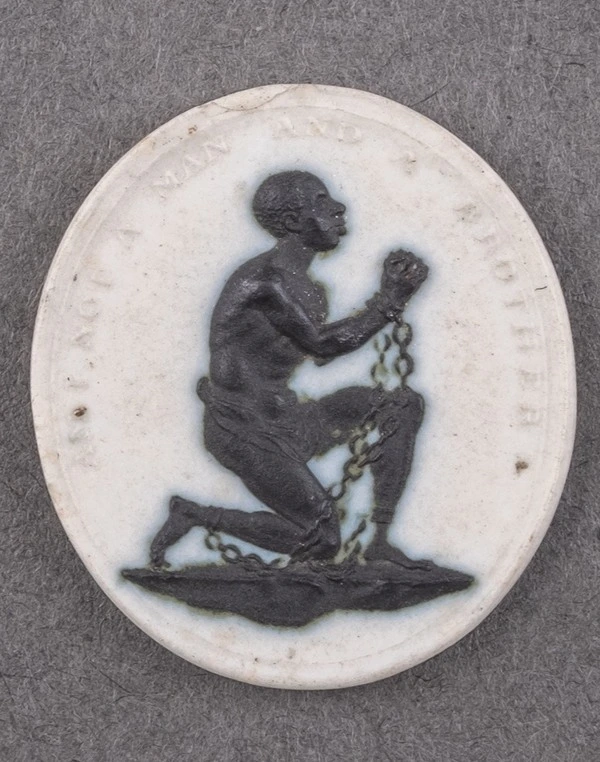
Josiah Wedgwood was a staunch abolitionist (opponent of slavery). He joined the Society for Effecting the Abolition of the Slave Trade. In 1787, he designed and produced a Jasperware medallion depicting a kneeling, chained slave surrounded by the text, “Am I not a man and a brother?” This medallion became one of the first and most effective political symbols in history. Worn in fashionable hairstyles, on tobacco boxes and as brooches, it helped turn public opinion in Britain against the transatlantic slave trade.
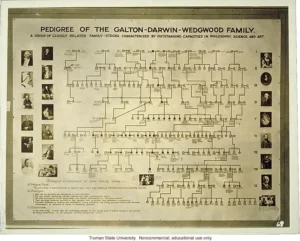
For generations, the Wedgwood family produced intellectuals and scientists. One of the most fascinating historical connections is with the famous natural scientist Charles Darwin. Charles Darwin was the grandson of Josiah Wedgwood (through his mother, Susannah Wedgwood). Moreover, Darwin later married his full cousin, Emma Wedgwood. The fortune Josiah had accumulated from his factories enabled Darwin to finance his scientific voyages (such as those on the HMS Beagle) and write his theory of evolution without financial worries.
Although Wedgwood was a symbol of stability well into the 20th century, the company did not escape the economic laws of modern times. The rise of cheaper mass production from Asia and changing consumer preferences, younger generations dining less formally and seeking less traditional dinnerware, shook the brand.
To strengthen its position in the world market, Wedgwood merged with the famous Irish crystal brand Waterford Crystal in 1986. Thus was born Waterford Wedgwood. Although the combination of high-end crystal and exclusive porcelain promised synergy, the group’s debt burden proved to weigh heavily on operating profits.
The global credit crisis of 2008 dealt the final blow. The luxury sector collapsed and Waterford Wedgwood’s mountain of debt became unsustainable. On Jan. 5, 2009, the company went into receivership, a formal bankruptcy. This sent a shock wave through British industry. The survival of the historic collections and craftsmanship in Staffordshire hung by a thread.
The American private equity firm KPS Capital Partners bought up the assets and transferred the brand to a new holding company: WWRD Holdings Ltd (Waterford Wedgwood Royal Doulton). Major reorganizations took place; part of mass production was moved abroad (including Indonesia), while the absolute masterpieces and Jasperware production were retained in Barlaston.
Peace and stability finally returned in 2015 when Finnish consumer goods giant Fiskars (known for its iconic orange scissors and brands such as Iittala and Royal Copenhagen) acquired WWRD. Under the Fiskars umbrella, Wedgwood regained the space to focus on premium design and combine its rich tradition with Scandinavian efficiency.
A brand with such a long history has logically gone through an evolution in its branding. The stamps and logos on the underside of the pottery , called backmarks, are invaluable to collectors in determining the age and authenticity of a piece.
In the early days, Josiah simply used his own name. The oldest pieces show the name WEDGWOOD stamped in sans serif letters. Sometimes in combination with the place name ETRURIA. When Josiah collaborated with his business partner Thomas Bentley (between 1769 and 1780) for decorative art objects, the Wedgwood & Bentley brand read.
Around 1891, due to the US McKinley Tariff Act (which required imported goods to state the country of origin), the word ENGLAND was added to the logo. Beginning in 1908, this was changed to MADE IN ENGLAND. For refined porcelain, a stylized Portland Vase was included in the stamp beginning in the early twentieth century, often accompanied by the term Bone China.
Today, the logo is streamlined for the digital and global marketplace. It is a clean, minimalist wordmark: WEDGWOOD ENGLAND 1759, often paired with a modern, abstract icon referencing the Portland Vase. It reflects the duality of today’s brand: proud of its roots in 1759, but with a keen eye on the future.

In the 21st century, Wedgwood has continued to modernize. The brand has successfully bridged the gap to the contemporary lifestyle. One way they do this is through high-profile collaborations with modern fashion designers and artists.
While new design lines appeal to modern consumers, the love for classic heritage is greater than ever. Iconic, traditional dinnerware such as Edme, Wild Strawberry and the recently discontinued Cornucopia remain as popular as ever. As many of these classic lines or specific parts of them have been discontinued over the years, a vibrant and very active market has emerged among collectors.
Worldwide, enthusiasts scour auction houses, online platforms and specialty stores such as Marbutol scour to add to their dinnerware or obtain a complete vintage set. This shows that the early designs have achieved timeless status; they are no longer seen as utensils, but as valuable investments and beloved family heirlooms passed down from generation to generation.
At the same time, the World of Wedgwood in Barlaston remains an important tourist and cultural center. Visitors there can visit the museum, which houses the unique historic V&A Wedgwood collection, watch artisans live at work turning and decorating Jasperware, and enjoy a traditional Afternoon Tea from a Wild Strawberry cup.
Wedgwood’s history shows that true craftsmanship never goes out of style, provided it goes hand in hand with innovation. Josiah Wedgwood turned a craft art form into a global industry by connecting science, art and marketing. Despite economic storms, the pain of bankruptcy and the need for radical modernization, the essence of Wedgwood remains intact after more than 250 years: an unparalleled commitment to quality and an aesthetic that transcends generations. Whether a historic piece of Black Basalt in a museum or a modern Edme plate on the kitchen table; Wedgwood remains the embodiment of British craftsmanship at its best.


